

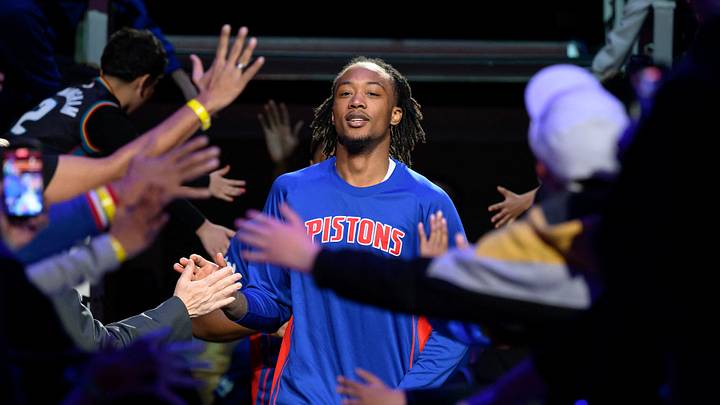
The Detroit Pistons didn't have the offseason many fans were hoping for, but they still had an active transaction period. They retained their core (assuming Jalen Duren is back) and added more shooting. Whether they entirely changed the fate of the franchise or made themselves a Tier 1 title contender, however, remains to be seen.
If the Pistons fail to take a step forward next season, a few of their offseason decisions will have played a part. Let's take a look at what the Pistons might regret looking back on this summer a year from now.
Letting Tobias Harris go
Harris signed a two-year, $30.8 million contract with the Spurs. Instead of matching or beating this offer, the Pistons decided to use their resources on John Collins.
There is a chance that this is an upgrade. Harris is 34 years old. Wanting to get younger and more athletic at the power forward spot is understandable.
At the same time, Harris was arguably the second-best player on the Pistons during last season's playoff run. He has been a consistent and reliable two-way option for Detroit. Whether Collins can provide the same impact and production is unclear.
Not trading Ron Holland
The Pistons clearly believe in Holland. There is a lot to like about the 21-year-old small forward. He is already a very good defender and has elite physical and athletic tools. Entering his third season, Holland still has a ton of upside.
The problem is, it's highly unlikely that he will be able to reach this upside in Detroit. He is an awful shooter and is a net negative in half-court offense. Some teams can compensate for his shortcomings, but the Pistons are the last team that can have another non-shooting perimeter player. For a team that has Ausar Thompson, Jalen Duren, and a slew of questionable shooters up and down the roster, Holland should be expendable.
This summer, Holland still would have had positive trade value. His $9 million salary for next season, attached to draft capital, could have landed the Pistons a true impact player. Another season where Holland is limited to a bench role and looks like an offensive liability will only tank his trade value. It's difficult to imagine his trade value going any higher between now and next season.
Not trading for Trey Murphy
The most popular trade target for the Pistons was Trey Murphy of the New Orleans Pelicans. The 26-year-old sharpshooter was reportedly available, but the Pelicans' front office had an exorbitant asking price. It was speculated to be three first-round picks.
So, the Pistons refused to aggressively pursue Murphy. While this is forgivable due to the price tag, Murphy is the type of player who would have catapulted the Pistons to the top tier of contenders. He fits Detroit's timeline, is on a very team-friendly contract, and can shoot the ball as well as anyone. He would have been the perfect wing starter for the Pistons for years to come.
Championship windows can open and close very quickly. Recent NBA history is full of young teams that thought they had many, many years to contend before flaming out earlier than expected. Standing pat is generally seen as the safe choice, but not being aggressive carries its own risks.
The Pistons took a risk by not making a significant upgrade this summer, and if they fail to take the next step over the next couple of seasons, they may look at the Trey Murphy saga as a missed opportunity.
 Add us as a preferred source on Google