

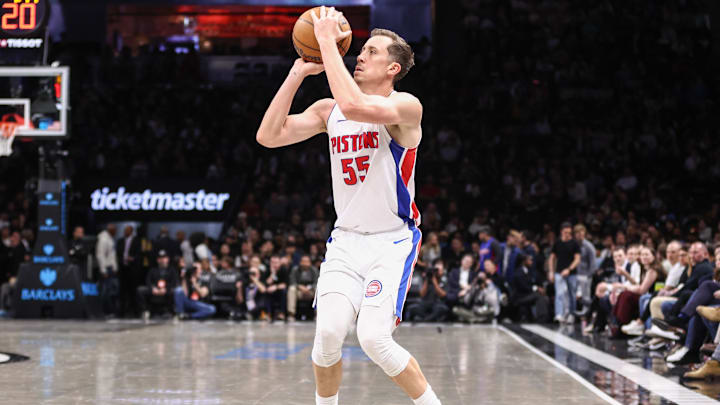
The Detroit Pistons have been the best story in the NBA all season. This team has exceeded all expectations, turning into title contenders earlier than anyone could have imagined. The roster and the coaching staff deserve all the credit for this incredible resurgence. At the same time, the playoffs are a different beast, and there is no guarantee that the regular-season success will translate. Due to a few glaring weaknesses, the Pistons could be especially vulnerable in the postseason.
The most important weakness for the Pistons may also be an impossible-to-solve one. Plain and simple, Detroit lacks two-way players, especially on the perimeter. This is a roster construction issue, one that prevents head coach JB Bickerstaff from putting together lineups that can be elite on both ends of the floor.
Pistons' Lack of Two-Way Players Could Be Their Downfall in the Playoffs
Detroit's defensive ceiling is as high as any team in the league. They have a ton of elite defenders, including Isaiah Stewart, Ron Holland, and Ausar Thompson. The Pistons are an extremely difficult team to attack when their best defenders are in uniform and available to play.
The issue is, when the Pistons have their best defenders out there, their half-court offense completely nosedives. Thompson and Holland are still massive weaknesses on that end of the floor. They can't shoot and space the floor, making them a tough fit around Cade Cunningham and Jalen Duren. Caris LeVert has taken a significant step back offensively this season, as well.
When Holland is on the floor, the Pistons have a 112.9 offensive rating, which ranks sixth-worst in the NBA, per Cleaning the Glass. That is 7.9 points per 100 possessions worse than the Pistons offense without Holland. A similar on/off difference exists for LeVert.
That is why the Pistons have heavily relied on Duncan Robinson all season to juice their offense. He is the only elite shooter on the team, and the Pistons' offense looks significantly different when he is out there, thanks to his off-ball gravity.
The problem is, Robinson is a massive defensive liability. Every time he is on the floor, he has a target on his back, allowing teams to attack him relentlessly. We have seen good offensive teams hunt Robinson as their primary clutch offense strategy time and time again. This will only exacerbate in the playoffs when teams are scheming specifically against the Detroit defense.
It is, therefore, not a coincidence that the Pistons' defensive rating is 4.8 points per 100 possessions worse when Robinson is playing. When he is on the bench, Detroit has the best defense in the NBA.
This will be the challenge for Bickerstaff in the playoffs. He has elite defenders who are liabilities on offense, or elite offensive players who create significant defensive issues. There are not enough players on the roster who can be a plus on both ends of the floor. Without reinforcements this offseason, it's very difficult to see how the Pistons can overcome this big problem.
More Detroit Pistons news and rumors:
 Add us as a preferred source on Google