

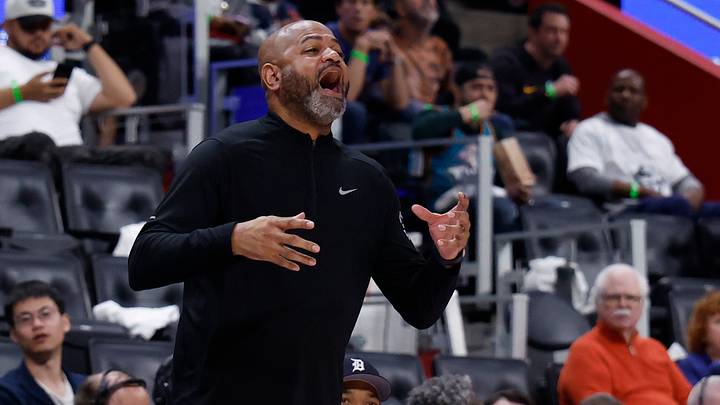
The Detroit Pistons have been active all summer revamping the roster. After a disappointing end to their season, the Pistons made it a priority to change things up. It hasn't been the splashy blockbuster move that fans have been hoping for, but the Pistons will look different next season with the additions of John Collins, Isaiah Joe, and Ebuka Okorie.
Still, the Pistons aren't done. The Jalen Duren saga remains unresolved, and GM Trajan Langdon may have more up his sleeve.
Regardless of what else the Pistons front office does this summer, one move stands out as a big head-scratcher. Everything else can be justified, but Detroit's decision to give Kevin Huerter a three-year, $27 million contract made very little sense at the time, and a week later, it's still confusing.
Kevin Huerter's contract looks much worse after seeing other FA signing
Upon first hearing about the signing, one had to wonder whether there were some partial or non-guarantees. But, no, it turns out, the Pistons have a team option for the final year, but the first two seasons are fully guaranteed.
This begets the questions: Who were the Pistons bidding against for Huerter, and why did they feel like they had to pay him a multi-year deal for that price?
Detroit's desire to keep Huerter is understandable. They need more shooting and offensive firepower. As a deep bench player, he is not a bad option. The problem is, Huerter hasn't been making shots in a long time. The last time he shot an above-average mark from the three-point range was the 2022-23 season. He has been an inefficient shooter for the last three seasons, and it's not like he provides much value defensively.
Looking at other free agent signings who play a similar role and position to Huerter, it's clear that the Pistons significantly overpaid.
Landry Shamet signed a four-year, $24 million deal with the Knicks. Luke Kennard signed a two-year, $13 million contract with the Suns. Tim Hardaway Jr. signed a one-year, $6.5 million deal with the Heat, and Anfernee Simons got $12.3 million for two years from Philadelphia.
All four of these players played at a higher level than Huerter. Yet, they all got less annual average salary in their deal than Huerter.
Was Huerter really not going to accept a one-year, $8 million deal from the Pistons? Was a two-year contract worth $12 million not going to be enough to retain him? Did the Pistons really have to pay above the market for an offense-first backup shooting guard who shot 30.8% from three last season?
If they did, then they would have been better off just letting him walk. One-position backup shooters aren't hard to find. Especially when the Pistons had already added Isaiah Joe and have a crowded backcourt, giving Huerter this type of contract simply doesn't make much sense, even if he starts making more shots next year.
 Add us as a preferred source on Google